
Our Legislative Proposal
What we are doing
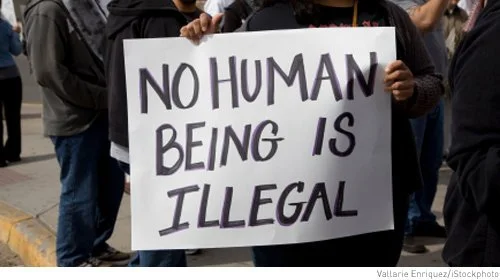
When CH4IR first formed after the raid on Cilantro in January 2025, it developed a policy committee to research best practices from municipalities around the country for protecting immigrant rights. We developed this 8-point proposal for the City of Cleveland Heights based on that research (now 9 with the addition of Flock No).
About our proposal
Our proposal has 9 sections addressing various aspects of immigrant rights. We are focusing first on passing Section 1- Legal Counsel for Immigrants- to be passed by Cleveland Heights City Council, with plans to pursue all nine sections.
1
SECTION 1: Legal Counsel for Immigrants
At a time when the majority of people detained by ICE have no criminal record and the Supreme court has made it legal for ICE to racially profile, we know access to good legal counsel makes it 10X more likely for immigrants to win their case and avoid another unjust deportation. Our proposal for legal counsel for immigrants is about guaranteeing the Constitutional right for all people in the United States to due process. This proposal is legal, it has been passed in over 70 municipalities around the country (including Columbus, OH), and it is one tangible way our city of Cleveland Heights can stand up for immigrant rights at a time it is so needed.
Read This Section of the Proposal Hide This Section of the Proposal
The City of Cleveland Heights shall ensure the access to free legal representation for immigrants facing removal proceedings, including those who resided in Cleveland Heights immediately before being detained. The City will adopt a pilot project adopting a universal representation model, in which a limited number of immigrants facing removal proceedings will have access to legal representation, regardless of their ability to pay or likelihood of relief. The pilot project shall last for two years, after which the City will evaluate whether to expand and continue the program. During the pilot program, the City may contract with a Lead Partner Organization as a subcontractor, which has the capacity to establish and implement a program to provide access to legal services for immigrants facing removal. Immigrants facing removal will receive access to legal services from designated organizations under contract with the Lead Partner Organization. Apart from functions related to billing, invoicing and some communications (sending out a mass mailing to notify residents of the program and referring residents who may call the City rather than the provider directly to the provider), it is anticipated that the City of Cleveland Heights will have minimal obligations related to the proposal. Presumably, the City of Cleveland Heights will review reports from the LSP, however the scope and frequency of that review is at the discretion of the City. To further strengthen access to justice, the City will also:
- Host bi-monthly legal orientation sessions and free immigration screenings in languages spoken in the community;
- Support referrals to vetted pro bono or low-cost attorneys when the universal representation program reaches capacity;
- Establish a mentorship program for non-immigration attorneys who commit to taking pro bono removal cases, building long-term local capacity.
This investment is not only a moral imperative but also a practical one. Ensuring access to legal representation protects families, strengthens due process, and upholds the values Cleveland Heights stands for. The City of Cleveland Heights will engage culturally appropriate communications strategies to ensure the affected parties are made aware of these services so that they may access them.
2
SECTION 2: Affirmation of Human Rights
This section urges the city to use language that recognizes the humanity of all human beings, regardless of immigration status. It makes sure noncitizens are treated equally under the law and not discriminated against because of their immigration status. To do this, the City will update city laws to replace the word “citizen” with “community member” where appropriate. This means the protections in the law will apply to all community members, not just those defined as citizens.
Read This Section of the Proposal Hide This Section of the Proposal
The City of Cleveland Heights affirms that all residents, regardless of their immigration status, are entitled to fundamental human rights and protections. The City will continue to advocate at the county, state, and federal levels for humane immigration reform and an end to policies that separate families and criminalize the presence of immigrants. “Noncitizens” is added to the classes of people guaranteed equal protection of the law under the City’s ordinances, and the City Attorney is directed to draft appropriate amendments to the City ordinances to include “noncitizens” where reference is made to older adults; racial, ethnic, and religious minorities; women; people who are lesbian, gay, bisexual, transgender, or queer; or people with disabilities. (Noncitizen refers to the following list that includes but is not limited to: Lawful Permanent Residents, Refugees/ Asylees, nonimmigrant visitors, people with Temporary Protected Status, DACA recipients, and undocumented individuals. “Immigration or citizenship status” is added to the list of personal characteristics on the basis of which persons should not be subject to discrimination under the City’s ordinances, and the City Attorney is directed to draft appropriate amendments to the City ordinances to include “immigration or citizenship status” where reference is made to race, color, religion, national origin, gender, age, sexual orientation, gender variance, marital status, military status, or physical or mental disability. In order to guarantee equal protection of the law to noncitizens and to eliminate discrimination on the basis of immigration or citizenship status, the City Attorney is directed to draft amendments where appropriate to the City ordinances to replace instances of the word “citizen” with the words “community member.”
3
SECTION 3: Fourth Amendment
This section urges the city to proclaim itself as a Fourth Amendment Workplace. The Fourth Amendment to the United States Constitution protects individuals from unreasonable searches and seizures by the government, requiring law enforcement to have probably cause and a warrant signed by a judge. All city employees would be trained on the Fourth Amendment and how to uphold it, and local businesses would be encouraged to train and declare themselves Fourth Amendment Businesses.
Read This Section of the Proposal Hide This Section of the Proposal
We resolve that Cleveland Heights is proclaimed a Fourth Amendment Workplace; that the City Manager is to direct City staff to uphold the Fourth Amendment at their workplace and report back to Council any needs or barriers to effective training on the Fourth Amendment for any departments; we encourage all City of Cleveland Heights workplaces to join this effort to ensure respect for the Constitution and discourage Federal overreach into local communities.
4
SECTION 4: Family and Youth Support
Asks the city to coordinate with various other public and private entities in Cleveland Heights to provide services and support for immigrant families and youth such as:
- Trauma-informed counseling
- Legal and mental health counseling
- Food assistance
- Childcare
- Emergency housing assistance
- Family reunification resources when possible
Read This Section of the Proposal Hide This Section of the Proposal
The City will coordinate with schools attended by Cleveland Heights students, including the Cleveland Heights-University Heights School District, parochial schools, and private schools; faith communities; and, community-based organizations (SEE ADDENDUM A with list of organizations and services) to provide services and support for immigrant families and youth impacted by immigration enforcement, including but not limited to: trauma-informed counseling, legal and mental health counseling, food assistance, childcare, emergency housing assistance, and family reunification resources when possible.
5
SECTION 5: Ending Harmful Enforcement of Low-Level Infractions
This section would decriminalize the lower level infractions and ordinances of the City of Cleveland Heights.
The City of Cleveland Heights has a plethora of ordinances that criminalize low level infractions: Your dog getting out, paint peeling on your house, or receiving a parking ticket can lead to having your license revoked, jail time, and having a permanent criminal record. These low level infractions are set up to criminalize poverty in our community. Fines upon fines add up to $100s of dollars for the poorest community members among us, leading to the aforementioned serious penalties. This is referred to as the “poverty tax” across the country.
In Cleveland Heights, this disproportionately affects lower income Black and Brown residents. And in the case of immigrants, the poverty tax can lead to a criminal record for something like a traffic ticket when they are unable to pay the mounting fines and fees. Having a criminal record increases the chances of that individual of being targeted by ICE and caught up in the immigration system.
Decriminalizing our lower level infractions will directly help immigrants avoid getting caught up in the immigration system and lower their chances of unjust targeting by ICE. It will also greatly reduce the chances of all residents being criminalized for low level infractions.
Read This Section of the Proposal Hide This Section of the Proposal
The City shall, within the ninety (90) days following the effective date of this section, conduct a review of the Cleveland Heights Code of Ordinances in consultation with stakeholders and shall, to the maximum extent possible while preserving public safety, implement revisions to all penalties for non-violent infractions of the Codes that will:
- De-criminalize said code violations
- Eliminate or greatly reduce incarceration
- Eliminate or greatly reduce monetary fines, fees, and punishment of community members for inability to pay fines and fees
- Eliminate suspension of drivers’ licenses as a penalty for said violations
Explore alternatives to punitive fines for such infractions, including restorative justice models and diversion programs.
6
SECTION 6: Local Enforcement vs. Federal Enforcement of Immigration Laws
The number one way immigrants get into ICE’s system is through cooperation of local police with ICE for low level infractions like traffic stops. Entanglement of local law enforcement with federal immigration enforcement encourages profiling and discrimination in local policing. Numerous studies have confirmed that noncitizens, whether present in the United States with status or without, do not engage in more criminal activity than citizens, and in fact engage in less criminal activity than citizens, establishing that immigration is not a public safety issue.
Immigration enforcement is the federal government’s role and there are no laws requiring city officials to participate in federal immigration enforcement. We ask city employees, including police, to not enforce or assist with federal civil immigration laws, ask about immigration status, share that information, or use city resources for immigration enforcement unless the law specifically requires it or there is a valid warrant for arrest signed by a judge.
Read more about this issue here: https://www.policinginstitute.org/wp-content/uploads/2015/06/The-Role-of-Local-Police-Narrative.pdf
Read This Section of the Proposal Hide This Section of the Proposal
Unless otherwise required by immigration detainers or administrative warrants, city agents shall refrain from the enforcement of federal civil immigration laws. No city agents, including agents of law enforcement entities, shall use city monies, resources, or personnel solely for the purpose of detecting or apprehending persons whose only violation of law is or may be a civil immigration violation.
The Cleveland Heights Police Department shall not inquire into or record the immigration status of any individual, unless required by law. The Department will participate in joint operations with federal immigration authorities only when required by law. When required by law, this section shall not interfere with criminal investigations or proceedings that are authorized by judicial process or restrict a City employee from fully investigating, participating in, cooperating with, or assisting federal law enforcement agencies in criminal investigations.
The Department shall not maintain information regarding an individual’s immigration status unless required by state or federal law. Any information about immigration status obtained inadvertently will be treated as confidential and will not be shared with federal immigration authorities.
The Department shall not honor civil immigration detainers or requests from ICE that are not accompanied by a judicial warrant or federal or state court order. An order from federal immigration authorities alone does not satisfy this requirement and will not be the basis of a civil immigration detainer or the delay in an individual’s release from custody.
No city funds, personnel, or equipment shall be used to enforce federal immigration law, except as specifically required under federal or state law. Furthermore, the Department shall provide regular training to officers on the rights of immigrants, cultural competency, and non-discriminatory policing practices.
7
SECTION 7: Proper Identification of Law Enforcement
Makes it an offense for a law enforcement officer to interact with the public in the performance of the officer's official duties while wearing a face covering and without clearly displaying the officer's name or badge number on the officer’s uniform or other clothing in a manner that is visible to the public.
Read This Section of the Proposal Hide This Section of the Proposal
As used in this section, "law enforcement officer" means an officer of a local, state, or federal law enforcement agency, or a person acting on behalf of a local, state, or federal law enforcement agency. It is an offense for a law enforcement officer to wear a mask, face covering, or personal disguise while interacting with the public in the performance of the law enforcement officer's official duties. A law enforcement officer may, while interacting with the public in the performance of the officer's official duties, wear a mask or face covering that: (A) Meets the U.S. National Institute for Occupational Safety and Health N95 classification for the purpose of preventing the transmission of airborne diseases; or (B) Is designed to protect against exposure to smoke or other airborne particles during a state of emergency related to a natural disaster; and HB1442 008772 - 1 - (2) Special weapons and tactics (SWAT) team officers may utilize gear necessary to protect the officers' faces from physical harm while in the performance of SWAT responsibilities. It is an offense for a law enforcement officer to interact with the public in the performance of the officer's official duties without clearly displaying the officer's name or badge number on the officer’s uniform or other clothing in a manner that is visible to the public. Any violation of this section is a Class C misdemeanor.
8
SECTION 8: Support of Crime Victims
When immigrants fear city involvement in immigration enforcement they are less likely to trust police or officials, report an emergency, testify or appear at court. Our entire community is safest when everyone trusts and utilizes law enforcement agencies.
The city will help anyone report crimes and will work with victims and witnesses regardless of their citizenship or country of origin, including completing required immigration certification forms for victims of serious crimes like domestic violence, assault, trafficking, and similar offenses.
Read This Section of the Proposal Hide This Section of the Proposal
The City of Cleveland Heights, including the Cleveland Heights Police Department, shall cooperate with those who report crimes, regardless of whether such report is made by a witness or a victim, or a representative thereof, including an attorney, accredited representative, or domestic violence or sexual assault services provider, and regardless of the citizenship or nation of origin of the reporter. Upon receiving a request for completion of a law enforcement certification form or statement required by federal immigration law certifying that a person is a victim of qualifying criminal activity, a certifying official shall complete the certification form for any victim of Qualifying criminal activity. Qualifying criminal activity includes:
- Abduction
- Abusive Sexual Contact
- Blackmail
- Domestic Violence
- Extortion
- False Imprisonment
- Female Genital Mutilation
- Felonious Assault
- Fraud in Foreign Labor Contracting
- Hostage
- Incest
- Involuntary Servitude
- Kidnapping
- Manslaughter
- Murder
- Obstruction of Justice
- Peonage
- Perjury
- Prostitution
- Rape
- Sexual Assault
- Sexual Exploitation
- Slave Trade
- Stalking
- Torture
- Trafficking
- Witness Tampering
- Unlawful Criminal Restraint
- Other Related Crimes
Qualifying criminal activity also includes any similar activity where the elements of the crime are substantially similar, as well as attempt, conspiracy, or solicitation to commit any of the above and other related crimes.
The City of Cleveland Heights shall designate an official or officials in supervisory roles to respond to requests for completion of certification forms received by the agency, as required by this Section.
The City of Cleveland Heights shall make information regarding the City’s procedures for certification requests publicly available for victims and witnesses of qualifying criminal activity, and their representatives.
Upon receiving a request for completion of a certification form, a certifying official shall complete the certification form for any victim of qualifying criminal activity. In completing the certification form, there is a rebuttable presumption that a victim is helpful, has been helpful, or is likely to be helpful to the detection or investigation or prosecution of that qualifying criminal activity, if the victim has not refused or failed to provide information and assistance reasonably requested by law enforcement. The certifying official shall fully complete and sign the certification form and, regarding victim helpfulness, include specific details about the nature of the crime investigated or prosecuted and a detailed description of the victim's helpfulness or likely helpfulness to the detection or investigation or prosecution of the criminal activity. The certifying official shall complete the certification form and provide it to the person within 90 business days of receiving the request, except:
(1) if the person making the request for completion of the certification form is in federal immigration removal proceedings or detained, the certifying official shall complete and provide the certification form to the person no later than 21 business days after the request is received by the certifying agency;
(2) if the children, parents, or siblings of the person making the request for completion of the certification form would become ineligible for benefits under Sections 1184(p) and 1184(o) of Title 8 of the United States Code by virtue of the person's children having reached the age of 21 years, the person having reached the age of 21 years, or the person's sibling having reached the age of 18 years within 90 business days from the date that the certifying official receives the certification request, the certifying official shall complete and provide the certification form to the person no later than 21 business days after the request is received by the certifying agency;
(3) if the person's children, parents, or sibling under paragraph (2) would become ineligible for benefits under Sections 1184(p) and 1184(o) of Title 8 of the United States Code in less than 21 business days of receipt of the certification request, the certifying official shall complete and provide a certification form to the person within 5 business days; and
(4) a certifying official may extend the period by which it must complete and provide the certification form to the person only upon written agreement with the person or person's representative.
Requests for expedited completion of a certification form under paragraphs (1), (2), and (3) shall be affirmatively raised by the person or that person's representative in writing to the certifying agency and shall establish that the person is eligible for expedited review.
A certifying official who issued an initial certification form shall complete and reissue a certification form within 90 business days of receiving a request from a victim, witness or representative thereof to reissue. If the individual seeking recertification has a deadline to respond to a request for evidence from United States Citizenship and Immigration Services, the certifying official shall complete and issue the form no later than 21 business days after the request is received by the certifying official.
Requests for expedited recertification shall be affirmatively raised by the individual seeking reverification or their representative in writing and shall establish that the person is eligible for expedited review. A certifying official may extend the deadline by which he or she will complete and reissue the certification form only upon written agreement with the requestor or their representative.
Notwithstanding any other provision of this Section, a certifying official's completion of a certification form shall not be considered sufficient evidence that an applicant for a U or T visa has met all eligibility requirements for that visa and completion of a certification form by a certifying official shall not be construed to guarantee that the victim will receive federal immigration relief. It is the exclusive responsibility of federal immigration officials to determine whether a person is eligible for a U or T visa. By completing a certification form, the certifying official attests that the information is true and correct to the best of the certifying official's knowledge. If, after completion of a certification form, the certifying official later determines the person was not the victim or witness of qualifying criminal activity or the victim or witness unreasonably refuses to assist in the investigation or prosecution of the qualifying criminal activity, the certifying official may notify United States Citizenship and Immigration Services in writing. However, prior to doing so, the certifying official must give the person a reasonable period of time to respond to the assertion that they were not the victim or witness of qualifying criminal activity or unreasonably refused to assist in the investigation or prosecution of the qualifying criminal activity or unreasonably refused to assist in the investigation or prosecution of the qualifying criminal activity.
A certifying official shall not disclose the immigration status of a victim or person requesting the certification form, except to comply with federal law or State law, legal process, or if authorized, by the victim or person requesting the certification form.
9
SECTION 9: Flock No
Cleveland Heights for Immigrant Rights believes there are no policies or technical safeguards the City can adopt that would reliably prevent Flock surveillance technology from being used directly or indirectly for civil immigration enforcement. We believe Cleveland Heights should stop using Flock entirely and invest instead in policies and resources that genuinely promote safety, trust, and justice for all residents.
Read This Section of the Proposal Hide This Section of the Proposal
Cleveland Heights for Immigrant Rights believes there are no policies or technical safeguards the City can adopt that would reliably prevent Flock surveillance technology from being used directly or indirectly for civil immigration enforcement. Flock’s design enables data searches, sharing, and disclosure beyond local control, and experience across the country has shown that even well‑intentioned cities cannot stop this technology from being leveraged against immigrant communities. Constant surveillance is inherently dehumanizing, treating people as data points to be tracked rather than neighbors with rights and dignity. Other communities have recognized these harms and ended their use of Flock altogether. At a moment when proposals in the Ohio legislature would criminalize being undocumented and dramatically expand the penalties and risks immigrants face, continuing to operate a surveillance system that could be weaponized for immigration enforcement is especially dangerous.
While the City could enact policies aimed at further limiting the use of Flock data for immigration enforcement - such as banning searches at the request of immigration authorities, restricting any use that benefits immigration enforcement, prohibiting participation in inter-agency lookups for any immigration-related purpose, and opting out of network features that cannot be meaningfully restricted - there is no way to guarantee that Flock information will not be used for immigration enforcement as long as the City contracts with Flock. For these reasons, we believe Cleveland Heights should stop using Flock entirely and invest instead in policies and resources that genuinely promote safety, trust, and justice for all residents.
Get Involved.
Make a Difference.
CH4IR is a grassroots movement for immigrant rights. We exist solely because of people like you contributing your passions, talents, and time. To get involved and to receive our emails, sign up here.